
Magnetic Filters Fitted in Paisley & Renfrewshire
The cheapest thing you can do to keep a boiler alive on our water. Fitted on the return, system cleaned and dosed, done in a morning.
Soft water, steel radiators, black sludge
Greater Glasgow and Renfrewshire are supplied largely from Loch Katrine, and the water is very soft. That is good news for kettles and showers. It is less good news for a sealed heating system.
Soft water carries little in the way of scale but it is slightly more aggressive to steel. Radiators corrode from the inside, oxygen gets in through pump seals and plastic pipe over the years, and the result is magnetite — fine black iron oxide that circulates with the system water and behaves like grinding paste.
It settles in the bottom of radiators, so they go cold along the bottom and warm at the top. It blocks the narrow waterways of a plate heat exchanger, so hot water at the tap runs hot then lukewarm. It wears pump bearings and jams diverter valves. Every one of those is an expensive repair, and all of them are downstream of the same cause.
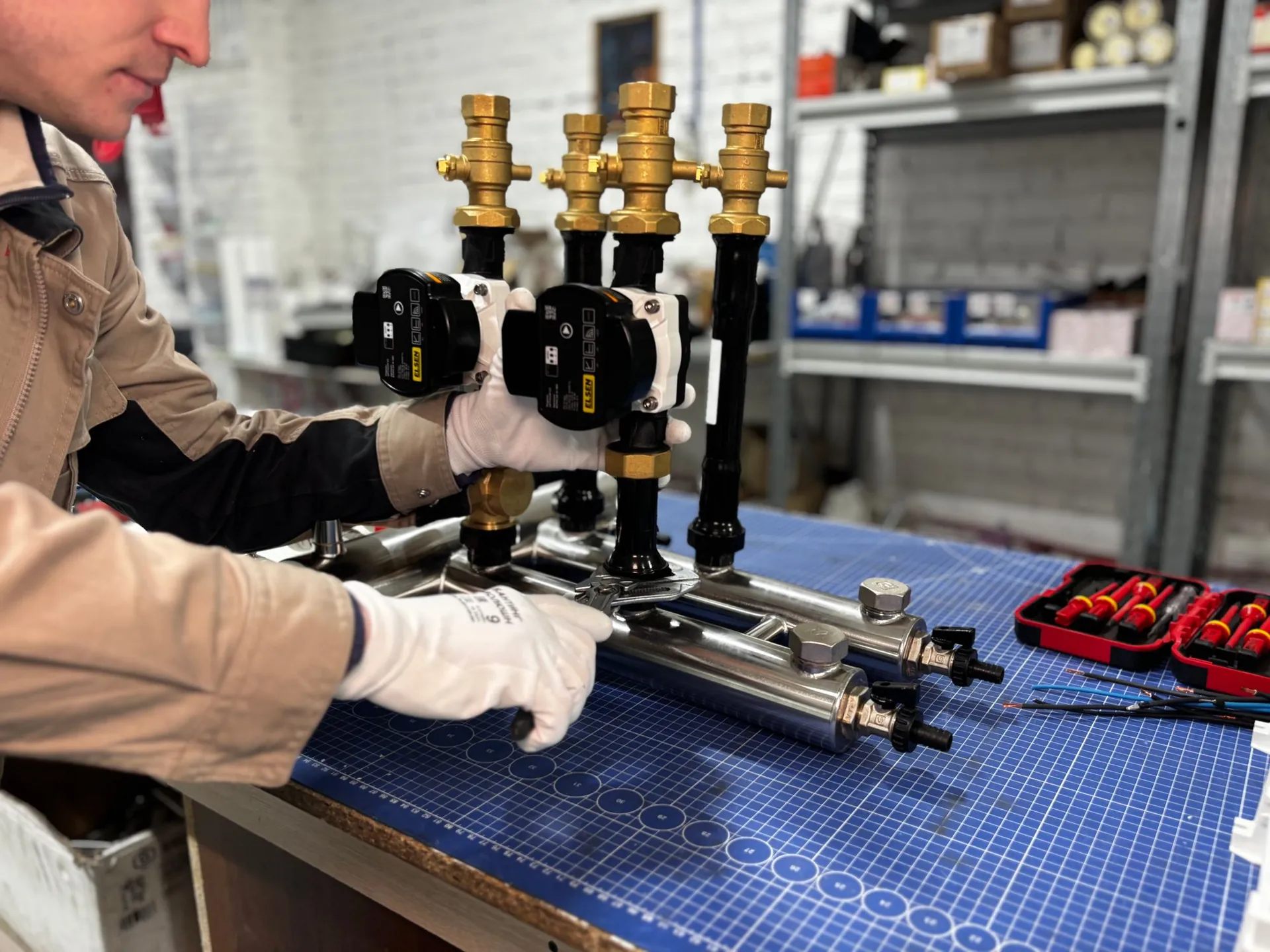
How I fit one
Test the system water
A sample tells me whether the inhibitor has been used up and how much iron is already circulating. That decides whether the system needs a chemical clean or a full power flush before the filter goes anywhere near it.
Clean before filtering
Putting a filter on a filthy system without cleaning it first just clogs the filter. BS 7593 is clear that cleaning comes first, then the filter, then fresh inhibitor.
Fit on the return, close to the boiler
On the return pipe so it catches debris before it reaches the heat exchanger, with full-bore isolation valves either side so it can be serviced without draining the system down.
Dose with inhibitor
Correct dose for the system volume. Inhibitor is consumed over time, which is why systems that were dosed once at installation ten years ago are the ones full of sludge now.
Clean it every year
It gets emptied and flushed at every annual service. What comes off the magnet is a useful running record of how the system is doing.
It may also be a warranty condition
Several manufacturers now require a system filter to be fitted before they will give you their longer warranty, and some will decline a heat exchanger claim if the system water was never treated. If you have had a new boiler in recently, it is worth checking what your warranty actually asked for.
Signs you already need one
- Radiators cold at the bottom, warm at the top
- Hot water hot for twenty seconds then lukewarm
- Water from a bled radiator running black
- Noisy pump, or kettling from the boiler
- Rooms furthest from the boiler never getting warm
Common questions
Do I need a power flush or just a filter?
Depends on the state of the water. A system that is only mildly discoloured can be cleaned chemically over a few hours. One with genuinely blocked radiators needs a proper flush with a pumping unit. I will test first and tell you which, rather than selling you the expensive one by default.
How long does fitting take?
The filter itself is a couple of hours including draining and refilling. A chemical clean adds most of a morning. A full power flush on a larger system is usually a full day.
Will it fix radiators that are already cold at the bottom?
Not on its own. The filter stops it happening again — the sludge already sitting in those radiators has to be removed first, which is what the clean is for. Fitting a filter and expecting it to pull twenty years of debris out of the system is the most common misunderstanding I come across.
Does it need power or maintenance?
No power at all. It is a canister with a magnet in it. The only maintenance is cleaning it out once a year, which is part of the service visit.
Get a filter on before the cold snap
Fitting a filter is a short job. Call with your boiler make and where the pipework runs and I will quote you for it.